2018年10月18日星期四

Patent Submission – Wearable Biometric Scanner Based EHR System

According to a patent application, it has been reported that Walmart’s current investigation of blockchain technologies have met healthcare demands.
Blockchain technologies have devised a method to obtain a patient’s health records from a blockchain database even if they are unable to communicate. A verification from two different keys is needed for this step.
  • A public key in a wearable scanned by emergency responders via RFID.
  • A private key obtained by scanning a patient’s biometric signature.
Both public and private keys are mandatory to access the patient’s record. The private key would be specific to each individual user.
The spokesperson from Walmart said, “If medical records were stored on the blockchain, the private key of the patient would be needed to view/modify the records. In the case where a user is unconscious or incapacitated in an emergency, a first responder could not access the user's medical records stored on the blockchain; thus, there is a need for a method and system for obtaining a medical record stored on the blockchain when the owner of the private key cannot readily provide the private key.”
For smooth functioning, an RFID scanner is needed to scan the wearable and obtain the public key. Also, a biometric scanning device is needed to verify a bodily feature of the patient (a fingerprint, an iris, a retina, or any facial feature) for accessing the private key. This method would allow the first responders to quickly access the complete health record of the patient. This also ensures that the EHR can be kept inaccessible to others.
from Drugdu  https://goo.gl/QgQoHk
Onitor Track – A Weight Loss Wearable

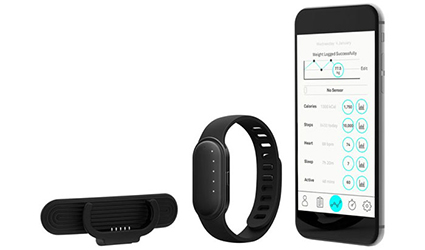
Onitor Track is an advanced biometric, data-driven program which aids in weight loss. Onitor Track combines a personalized weight loss and nutrition program with a dual-positioned wearable via an app.
This device can either be strapped to the wrist or clipped onto a chest band while performing exercise. The wearable behaves like an ECG heart rate monitor where accurate data will automatically be collected and paired with the data provided by the user via the app. This enables the device to deliver personalized nutrition advice and exercise programs according to the data, helping the user to easily achieve their weight loss target.
Amit Ben-Haim, the CEO of Cloudtag and creator of the Onitor brand, said "The Onitor Track succeeds by combining accurate data capture, which helps it build an excellent picture of each user, and smart manipulation of that data to make a fitness and nutrition program that is constantly refined to gain excellent results; Together, these two things show off two great strengths of our business: the hardware and the software, brought together with a highly targeted purpose."
Onitor Track was powered with technology from its parent company named Cloudtag. It is a technology innovation company led by Ben-Haim, an entrepreneur. Ben-Haim is famous as a co-founder of medical device company Biosense, which was later sold to Johnson & Johnson.

from Drugdu  https://goo.gl/QgQoHk

mHealth Wearable Effective in Detecting AFib, STSI Study Finds

Results of the much-anticipated 2016 Scripps Translational Science Institute's (STSI) mSToPS study on 5000 individuals revealed that an mHealth wearable is three times more efficient in diagnosing atrial fibrillation than the traditional screening tests advised by a doctor.
Results of this pioneering study, published this week in the Journal of the American Medical Association(JAMA), validate the efficacy of home-based digital health tools in detecting arterial fibrillation.
In a press release Steven Steinhubl, MD, STSI’s director of digital medicine and an associate professor at The Scripps Research Institute said “Our study shows an almost threefold improvement in the rate of diagnosis of AFib in those actively monitored compared to usual care.
The mSToPS study was launched by STSI in collaboration with Janssen Pharmaceuticals to compare conventional cardiac monitoring with remote monitoring by iRhythm’s Zio patch for ECH screening.
The 5,214 individuals recruited through Aetna’s fully insured commercial and Medicare health plans for this year-long study, witnessed new cases of AF in 6.3 percent of those using the mHealth patch, in contrast to 2.4 percent of the controlled population.
 “This study demonstrates the utility of a digital approach not only to diagnosing asymptomatic AFib but to the clinical research field as a whole,” Steinhubl said in the press release. “We hope that it will set a precedent for future real-world, participant-centric clinical trials that leverage the power of digital medicine technologies.”
from Drugdu  https://goo.gl/QgQoHk

Wearable ECG Monitor to check on your heart

"/
Wearable ECG Monitor
The Medical-level ECG recorder to monitor cardiac risk in sport, manufactured and supplied by the Chinese firm, Jiangxi Yeeroo Industrial Co., Ltd, is made available on Ddu (Drugdu.com), the leading global pharmaceutical and medical devices online B2B platform.
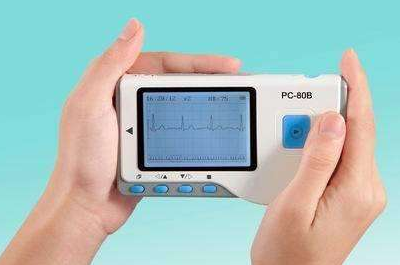
This ECG monitor works on the HeartBook MCT which is a multi-parameter cardiac telemetry system. It helps you stay connected with your health by Minttihealth ECG. It is the easiest and sleekest ECG reading wearable medical device available in the market. It is a known and trusted product world over. It gives modern-design ECG of excellent quality and provides top service.
The ECG monitor’s sleek and compact design enables you to know your heart’s health anytime, anywhere while it sits in your pocket. It has an in-built real-time monitor of multi-parameters, like the body posture sensor. It is built in an ergonomic design. It has an additional alarm feature which gives a real-time alert on APB, VPB, long interval, tachycardia, and bradycardia or when a tumble-down occurs, it sends SMS alerts to the guardian’s phone. It gets you connected immediately with medical professionals who give conclusions to the parameters recorded.
from Drugdu  https://goo.gl/QgQoHk


Carewave Medical raising cash for pain relieving wearable, with support from big biotech names

Medical device company Carewave Medical is looking to raise $1 million to support its wearable pain relief technology, according to an SEC filing. The Seattle-based company has already raised $150,000 and is backed by some big names in biotechnology and healthcare, the filing indicates.

Carewave co-founder and CEO Al Stephen declined to comment on the ongoing round when contacted by GeekWire. Carewave was founded in 2014 and was incubated by the Stratos Group, which includes biotech company Stratos Genomics, until 2016, Stephen said.
Stephen co-founded Stratos Group in 2001 and served as the company’s CEO until 2016, when he shifted focus to Carewave. He also helped co-found Stratos Genomics and served as the company’s CEO for nine years and he was the founder and longtime CEO of Stratos Product Development, a successful product development company that shut down suddenly in May of last year.
Also listed in the SEC filing: Harold Kawaguchi, chairman of the Stratos Group; longtime healthcare executive and member of Carewave’s board of directors Michaela Griggs; pain expert and Carewave co-founder and chief medical officer Dr. Charles Chabal; and University of Washington professor Peter Dunbar, whose LinkedIn Profile lists him as Carewave’s secretary of the board and chief medical officer, the same role as Chabal.
According to its website, Carewave is developing a wearable device that relieves lower back and menstrual pain using “Pulsed Heat Technology,” more generically called pulsed radiofrequency technology. While scientists are unsure exactly how the technology works, it has been studied as a way to treat chronic pain since the late 1990s.
A similar technology powers a device from RecoveryRx, which is aimed at patients recovering from surgeries.
Carewave’s device, the CarewaveGo, isn’t yet on the market, but the company touts several advantages of using the device.
Its website points out that the treatment is non-invasive and doesn’t require taking medication. It also says patients will be able to customize their pain treatment plan using the device.
from Drugdu  https://goo.gl/QgQoHk

Are Wearable Medical Devices Here to Stay?

"/

Mike Bolduc, global marketing manager at C&K, once stated that since the market growth in terms ofwearable medical devices wholesale reached $4 billion in 2017, it is expected to increase by 35 percent by 2019. Shane Walker, the principal analyst of digital health and wearable technologies at research firm HIS guaranteed that the wearable medical devices manufacturer would reach 170 million unit shipments this year by driving $20 billion in global manufacturer sales.
What makes wearable medical devices so special? Medical wearables are more impactful compared to other consumer goods since they integrate health and fitness gadgets such as smartwatches and activity trackers into medical applications. They are small, portable and can be used any time in any place such as homes, working places, hospitals etc. They are user-friendly and provide continuous real-time personalized information about blood pressure, temperature, pulse rate and BMI, outside a hospital. With the help of wearable medical devices, a continuous watch is possible for the patients who are affected by chronic diseases and lifestyle style changes. Hence, these wearable medical devices have positively influenced the market growth especially in India and China and have instigated a new trend.
Ddu (drugdu.com) give you the opportunity to discover a variety of models from our wearable medical devices wholesalers at affordable prices. Compare features and find the right one as per your personalized needs.
Would you like to view more of our wide range of products? [click here] to find exactly what you need!
from Drugdu  https://goo.gl/QgQoHk

Wearable Medical Device to Promote Maternal and Fetal Health in Late Pregnancy

"/
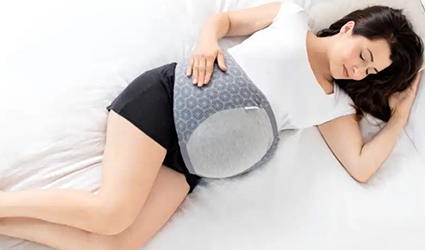
Wearable Medical Device  in Late Pregnancy
Many pregnant women sleep on their backs during the late stages of pregnancy. This, a new study found, can increase the risk of stillbirths due to oxygen deprivation followed by the improper breathing of the fetus. Though positional therapy is suggested by the physicians, there was no concrete prove up until now.
A research team from the University of South Australia in Adelaide conducted a study where they used a PrenaBelt as a positional therapeutic wearable medical device to promote both maternal oxygen saturation and fetal heart rate. By inserting a body position sensor in the PrenaBelt, the sleep position can be monitored to reduce supine sleep among pregnant women. The results were published in the Journal of Clinical Sleep Medicine dated Aug. 15, 2018.
Jane Warland, Ph.D., principal investigator and the associate professor at the School of Nursing and Midwifery from the University of South Australia, said "Our findings suggest that women can comfortably sleep wearing a device around their waist that effectively stops them from sleeping on their back. Using positional therapy to keep the pregnant mother off her back may reduce supine sleep in late pregnancy and may also provide both maternal and fetal health benefits, with minimal impact on the maternal perception of sleep quality and sleep time."
Jane Warland further added, "Wearing a device that minimizes back sleep, and which is comfortable and doesn't impact the mother's sleep length or quality, maybe a simple way to reduce stillbirth incidence, especially if the mother is at increased risk due to other factors."
Further research should be conducted to know more about the benefits and disadvantages of positional therapy in pregnancy cases.

from Drugdu  https://goo.gl/QgQoHk